Erie County Court serves as the central trial court within the county judiciary, handling a wide range of civil, criminal, family, and probate matters. It operates as part of the state judicial system and plays a direct role in resolving disputes that affect residents, businesses, and public agencies. The court hears cases at the trial level, where judges review evidence, question witnesses, and issue legally binding decisions. As a key part of the local court system, it upholds state laws and protects constitutional rights. Through structured court administration, the court manages filings, hearings, jury service, and official records, helping maintain order, fairness, and accountability across the community it serves.
Erie County Court manages both criminal prosecutions and civil claims, providing a formal process for resolving conflicts under state law. Criminal divisions handle felony and misdemeanor charges, arraignments, and sentencing, while civil divisions address contract disputes, property issues, and personal injury claims. Family and probate divisions oversee divorce, custody, estates, and guardianships. Court administration teams coordinate case scheduling, maintain public records, and support efficient case flow to reduce delays. Many county courts offer digital services such as electronic filing and online case searches, which improve transparency and public engagement. Through its organized judicial structure, the court supports consistent legal procedures and reinforces trust in the county judiciary.
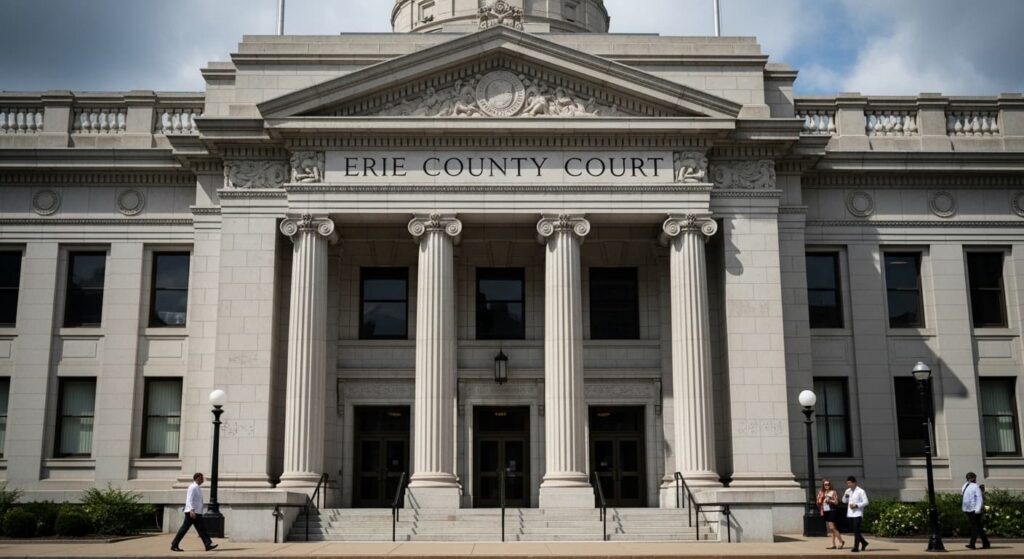
How to Search Erie County Court Cases
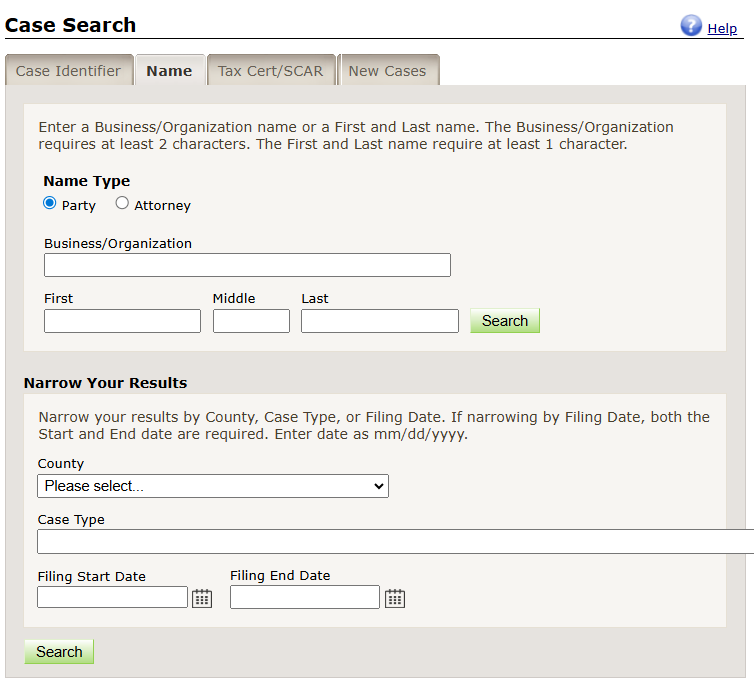
Searching Erie County Court records online is simple through the official New York State Courts Electronic Filing system. The NYSCEF Name Search tool allows users to find civil case records filed in Erie County by party name or attorney name. Official Name Search Portal: https://iapps.courts.state.ny.us/nyscef/CaseSearch?TAB=name
Steps for Erie County Court Case Search by Name
Follow these steps to perform an accurate Erie County Court case search:
Open the Official Case Search Page
Visit the NYSCEF Name Search page using the link above. The page will open with the “Name” tab selected.
Select the Name Type
Choose the option that matches your search need. You will see two search options:
- Party Name – Search by a person or business involved in the case
- Attorney Name – Search cases filed by a specific lawyer
Enter the Required Information
Accurate spelling improves search results. For best results:
- Enter the First Name and Last Name of the person
- For businesses, enter at least 2 characters of the company name
- Avoid extra spaces or punctuation
Filter for Erie County
Filtering reduces unrelated results and improves accuracy. To narrow your results:
- Select Erie County from the County dropdown
- Choose a Case Type (Civil, Supreme Court Civil, etc.)
- Add a Filing Date Range if needed
Click “Search”
Press the Search button to view matching Erie County Court cases.
The results page typically shows:
- Case Index Number
- Case Name
- Filing Date
- Case Status
- Court Location
Erie County Court Divisions & Case Types
Erie County’s court divisions are organized to handle different types of legal matters in a structured way. Each division operates under the New York State Unified Court System and follows specific procedures for filing, hearings, and case resolution. These court divisions help separate criminal court, civil court, probate court, family division, and traffic court matters so cases move through the system more efficiently and with clearer administrative oversight.
Criminal Division
The Criminal Division manages prosecutions involving violations of state penal law. This division handles both misdemeanor and felony charges filed within Erie County. Cases begin with an arraignment, followed by pretrial hearings, motions, plea discussions, or trial if necessary. Court clerks maintain official dockets, while judges oversee bail, evidence review, and sentencing. Criminal court proceedings focus on public safety and due process protections.
Types of Cases
- Assault and robbery
- Drug possession and distribution
- Weapons charges
- DUI / DWI offenses
- Probation violations
- Filing Instructions: Criminal cases are filed by law enforcement agencies or the District Attorney’s Office. Defendants receive a docket number at arraignment. Attorneys file motions through the NYSCEF e-filing system where permitted.
- Processing Time: Misdemeanors may resolve within several months. Felony cases can extend beyond a year depending on trial scheduling.
Civil Division
The Civil Court division handles disputes between private parties and organizations. These matters do not involve criminal penalties but may result in financial judgments or court orders. Civil court processes include filing a complaint, serving the opposing party, attending conferences, and possibly proceeding to trial. Case management procedures aim to reduce backlog and keep dockets organized.
Types of Cases
- Contract disputes
- Personal injury claims
- Property damage
- Landlord-tenant cases
- Monetary claims
- Filing Instructions: Plaintiffs file a summons and complaint with the Erie County Clerk. Filing fees vary based on claim value. Many civil matters qualify for electronic filing through the NYSCEF system.
- Processing Time: Small civil cases may conclude within months. Larger Supreme Court cases may take a year or longer.
Family Court
Family Court focuses on matters involving children and domestic relationships. The family division addresses sensitive legal issues that affect parental rights, child welfare, and support obligations. Judges often conduct hearings without juries and may involve social service agencies. Certain proceedings remain confidential under state law to protect minors.
Types of Cases
- Child custody and visitation
- Child support enforcement
- Domestic violence petitions
- Paternity proceedings
- Juvenile delinquency
- Filing Instructions: Petitions are filed at Erie County Family Court. Standard forms are available at the courthouse. Some cases require mediation before a judge issues a ruling.
- Processing Time: Emergency orders may be issued the same day. Standard custody cases may take several months.
Probate & Estate Court
Surrogate’s Court oversees probate court matters involving estates and guardianships. This division validates wills, appoints executors, and supervises estate administration. Probate proceedings require detailed documentation, including death certificates and asset inventories. Court supervision helps prevent fraud and protects beneficiaries’ rights.
Types of Cases
- Probate of wills
- Estate administration
- Guardianship appointments
- Trust disputes
- Filing Instructions: Executors file the original will and probate petition with the Surrogate’s Court Clerk. Filing fees are based on estate value. Certified copies may be requested for legal transactions.
- Processing Time: Simple probate cases may close within six to nine months. Contested estates may take longer.
Small Claims Court
Small Claims Court operates within the civil court structure and handles lower-value disputes. This division provides a simplified procedure designed for self-represented parties. Hearings are informal, and judges focus on resolving disputes quickly and fairly.
Types of Cases
- Unpaid debts
- Security deposit disputes
- Minor property damage
- Filing Instructions: Plaintiffs file a small claims application at the appropriate city or town court. Filing fees depend on the claim amount. The court schedules a hearing and notifies the defendant.
- Processing Time: Hearings are often scheduled within 30–60 days.
Traffic Court
Traffic Court handles violations related to driving and vehicle operation. These matters include moving violations and certain misdemeanor driving offenses. Drivers must respond to citations by the deadline printed on the ticket. Failure to respond may result in license suspension.
Types of Cases
- Speeding tickets
- DWI offenses
- License suspensions
- Parking violations
- Filing Instructions: Drivers respond using the citation number listed on the ticket. Responses may be submitted online, by mail, or in person.
- Processing Time: Traffic hearings are generally scheduled within several weeks.
Filing Procedures & Court Forms
Erie County courts follow structured filing procedures to keep cases organized and moving efficiently through the system. Anyone starting a lawsuit, submitting a petition, or responding to a case must complete proper filing documents and follow court rules. These legal services support accurate record keeping, fair notice to all parties, and compliance with state procedural law. Whether filing in person or using the e-filing system, careful preparation prevents delays and rejected paperwork.
Filing Process
Every case begins with selecting the correct court division and preparing the required paperwork. Filing documents must match the type of case being started, whether civil court, family division, or probate court. The clerk’s office reviews submissions for completeness before assigning a case number. Following each step in order helps avoid administrative delays and scheduling problems later in the process.
- Identify the correct court division
Confirm the proper division based on case type. - Obtain the correct court forms
Use official court forms download resources or pick up forms at the courthouse. - Complete all required fields
Use full legal names, current addresses, and accurate details. - Submit documents to the Clerk’s Office
File in person or through the e-filing system if eligible. - Pay required filing fees
Fees vary by case category. - Serve the opposing party
Deliver copies according to service rules and file proof of service.
Required Documentation
Required documentation depends on the case category and relief requested. Courts require specific forms to open a file and track proceedings correctly. Missing signatures, incomplete affidavits, or incorrect attachments may result in rejection. Supporting exhibits should be clearly labeled and attached in proper order to help the judge review the matter efficiently.
Common required documents include:
- Summons and complaint (civil court)
- Petition forms (family or probate court)
- Notice of motion
- Affidavit of service
- Supporting exhibits
For probate filings:
- Original will
- Death certificate
- Estate asset list
For civil matters:
- Request for Judicial Intervention (when applicable)
e-Filing System Availability
Erie County participates in the New York State Courts Electronic Filing (NYSCEF) system for many civil and Supreme Court cases. The e-filing system allows document submission without visiting the courthouse. Users can upload PDFs, receive notifications, and track case activity online. This system reduces paperwork handling and improves record accuracy within court administration.
Steps to use e-filing:
- Create a NYSCEF account.
- Select Erie County and case type.
- Upload completed filing documents in PDF format.
- Pay filing fees electronically.
- Receive confirmation of submission.
Filing Deadlines
Each case type has statutory deadlines that control when documents must be filed. Courts enforce these timelines to maintain orderly case progression. Missing a filing deadline may lead to dismissal, default judgment, or loss of legal rights. Parties should review summons instructions, court orders, and scheduling notices carefully to avoid procedural errors. Always check official instructions attached to court forms.
Examples include:
- Answer to civil complaint: typically 20–30 days after service
- Notice of appeal: must meet state time limits
- Emergency family petitions: may require immediate filing
Fee Payment Methods
Filing fees support court operations and vary depending on claim amount and case type. Payment must be submitted at the time of document submission unless a fee waiver is granted. The clerk issues a receipt confirming payment and case acceptance. Incorrect payment methods may delay processing. Personal checks may be restricted. Fee schedules are available at the Clerk’s Office or on the official court website.
Accepted payment options include:
- Credit or debit card (online through e-filing system)
- Money order
- Certified check
- Cash (in person)
Erie County Court Fees & Fine Payments
Erie County court administration oversees the collection of filing fees, court costs, and fine payments for all court divisions. These financial requirements support case processing, courtroom operations, record management, and public service functions. Payment obligations vary based on case type, severity of charges, and statutory requirements. Before filing documents or making a citation payment, parties should verify the correct amount with the Clerk’s Office or official court portal to avoid delays.
Civil Filing Fees
Civil court cases require payment when initiating a lawsuit or submitting certain motions. Filing fees depend on the type of case and the amount of money involved. The clerk will not assign an index number or process documents until the required court costs are paid. Keeping proof of payment is important for record accuracy and future reference. Payments are accepted by credit card (for e-filing), certified check, money order, or cash in person. Fee waiver applications may be available for qualifying applicants who demonstrate financial hardship.
Typical civil filing fees may include:
- Index number fee to begin a Supreme Court action
- Small claims filing fee based on claim value
- Motion or order to show cause fee
- Request for Judicial Intervention fee
Criminal Penalties & Court Costs
Criminal cases may include financial penalties imposed by a judge at sentencing. These amounts are separate from attorney fees and are paid directly through court administration. Penalties vary depending on the offense classification and statutory requirements. Courts maintain detailed records of outstanding balances and payment compliance. Defendants must follow the court’s payment schedule. Missed payments may lead to additional enforcement action or court review hearings.
Criminal financial obligations may include:
- Court-imposed fines
- Mandatory state surcharges
- Restitution to victims
- Probation service fees
Traffic Fine Payments & Citation Payment
Traffic violations carry specific fines set by state law and court schedules. Drivers who receive a ticket must either respond by the deadline or submit citation payment according to the instructions provided. Court administration tracks unpaid traffic fines and reports compliance status within the state system. Failure to respond may result in license suspension or additional penalties.
Traffic fine amounts depend on:
- Type of violation
- Prior driving record
- Statutory surcharges
Online Payment Portal
Erie County uses the New York State Unified Court System’s online services for certain fine payments and court costs. The online payment portal allows users to complete transactions without visiting the courthouse. Electronic payment improves record accuracy and provides instant confirmation. Some case types may still require in-person payment at the Clerk’s Office.
To pay online:
- Enter docket number or citation number.
- Confirm case details displayed.
- Submit payment using credit or debit card.
- Save or print confirmation receipt.
Jury Duty Information
Jury duty plays an important role in the Erie County justice system. Courts rely on local residents to serve as jurors in criminal and civil trials. When someone receives a jury summons, that notice requires a response within the stated time frame. Jury service requirements are set by New York State law and administered by court administration offices in Erie County. Participating in jury service helps protect the right to a fair and impartial trial.
Eligibility for Jury Service
Eligibility rules determine who may serve as a juror in Erie County. These standards help courts select qualified individuals who can review evidence and follow judicial instructions. Court administration reviews juror lists using official public records. If selected, potential jurors may be asked to confirm eligibility before reporting. Jurors may need to present identification during juror reporting.
To qualify for jury service, a person must:
- Be a United States citizen
- Be at least 18 years old
- Live in Erie County
- Understand and communicate in English
- Have no disqualifying felony conviction unless rights are restored
How to Respond to a Jury Summons
Responding correctly to a jury summons is required by law. The notice includes a juror index number and reporting date. Clear instructions explain how to confirm availability or request postponement. Ignoring the summons may result in follow-up notices or penalties. The juror must complete the response before the deadline printed on the notice.
Most summons forms allow response through:
- Online confirmation using the New York Unified Court System website
- Automated phone system
- Mail-in questionnaire return
Juror Reporting Instructions
Juror reporting instructions tell individuals where and when to appear. The summons may require checking online or calling a recorded message the night before reporting. This system helps courts adjust schedules based on case needs. Reporting times and locations vary depending on the court division. Security screening occurs at courthouse entry. Jurors should expect to remain available for several hours.
On the reporting day, jurors should bring:
- The jury summons notice
- Government-issued photo ID
Compensation for Jury Service
Jurors receive limited financial compensation for their time. Employers with more than a certain number of employees must provide regular wages for the initial days of service. After that period, the state pays a daily service fee. Court administration processes payment after jury service concludes. Payments are usually mailed to the juror’s home address.
Compensation may include:
- Daily juror stipend
- Limited travel reimbursement when applicable
Exemptions and Deferrals
Certain circumstances allow a juror to request postponement or exemption from service. These requests must include proper documentation and be submitted before the reporting date. Court administration reviews each application and sends written confirmation of approval or denial. Approved deferrals typically reschedule service for a later date within the permitted timeframe.
Common exemption reasons include:
- Medical hardship
- Financial hardship
- Recent prior jury service
- Full-time student obligations
Court Administration & Judicial Leadership
The county judiciary in Erie County operates under the authority of the New York Unified Court System. This centralized structure ensures that courts across the state follow uniform policies and procedural standards. Court administration focuses on efficient case management, public service accessibility, and judicial accountability. Through coordinated leadership, the county judiciary maintains transparency while supporting judges, attorneys, litigants, and residents who rely on timely court services.
Court Leadership Structure
The leadership structure within the county judiciary establishes clear lines of authority and operational responsibility. This system ensures that both judicial and administrative functions work together smoothly. Oversight at the district and county levels promotes consistent procedures, balanced caseload distribution, and compliance with statewide policies. Erie County courts operate under an Administrative or Supervising Judge who oversees court divisions and judicial assignments. This presiding judge manages courtroom scheduling, monitors caseload efficiency, and ensures adherence to legal standards. Supporting this role, the court administrator supervises non-judicial operations such as budgeting, staffing, facilities, and technology systems. Together, they coordinate policy implementation and operational performance across all court departments.
Judicial Roles
Judicial roles within the county judiciary are defined by state law and procedural rules. Judges are responsible for maintaining courtroom order, protecting constitutional rights, and ensuring fair legal proceedings. Their decisions directly impact individuals, families, and businesses throughout Erie County. Judges preside over criminal, civil, family, probate, and traffic matters. Their responsibilities include hearing evidence, ruling on motions, conducting trials, and issuing legally binding judgments. A presiding judge may also guide other judges within a division to maintain consistent interpretation of law. Judicial officers must remain impartial, apply statutory law accurately, and ensure each case proceeds according to established legal procedures.
Clerk of Courts Responsibilities
The Clerk of Courts serves as the administrative backbone of the county judiciary. This office ensures accurate recordkeeping, organized case tracking, and reliable public access to court documents. Clerks play a vital role in supporting judges and facilitating communication between the court and the public. Clerk responsibilities include processing filings, maintaining official dockets, collecting court fees, and issuing certified copies of records. The office manages document submission procedures and assists with case status inquiries. Clerks also maintain compliance with record retention policies and administrative regulations. Through structured case management and procedural oversight, the clerk’s office helps ensure the smooth functioning of Erie County courts.
Legal Help & Self-Help Resources
Access to reliable legal services is essential for individuals navigating the court system in Erie County. Whether someone is filing documents, responding to a lawsuit, or facing criminal charges, understanding available support options can make the process more manageable. Courts provide structured self-help resources, while independent organizations offer legal aid to eligible residents. These services are designed to improve access to justice, especially for individuals who cannot afford private attorneys.
Legal Aid Organizations
Legal aid programs provide free or low-cost representation in civil matters such as housing disputes, family law issues, consumer protection, and public benefits cases. In Erie County, residents may seek assistance from organizations such as Legal Aid Bureau of Buffalo, which serves eligible low-income individuals. Legal aid offices typically require income verification and case screening before accepting representation. Services may include legal advice, document preparation, negotiation support, and courtroom representation. Because demand is often high, applicants should contact the organization promptly and provide complete documentation during the intake process.
Public Defender Services
Individuals charged with criminal offenses who cannot afford an attorney may qualify for representation by the Erie County Public Defender’s Office. Public defenders represent clients in criminal court proceedings, including arraignments, hearings, plea negotiations, and trials. Eligibility for a public defender is determined by the court based on financial need. Defendants may be required to complete a financial affidavit. Once appointed, the public defender provides full legal representation, ensuring constitutional rights are protected throughout the criminal justice process.
Self-Help Centers
Self-help centers assist individuals who choose to represent themselves in civil or family court matters. These centers provide informational materials, court forms, and procedural guidance but do not offer legal advice. Court staff can explain filing steps, deadlines, and document requirements. Self-help resources are especially useful for uncontested divorces, small claims cases, and name change petitions. Many forms are also available online through the New York Unified Court System website, allowing users to download and prepare documents before visiting the courthouse.
Mediation Services
Mediation services offer an alternative dispute resolution process that helps parties settle conflicts without a full trial. Trained mediators facilitate communication between both sides to reach voluntary agreements. Mediation is commonly used in family disputes, small claims matters, and community conflicts. Courts may refer certain cases to mediation before scheduling a hearing. This process can reduce court costs, shorten processing times, and promote mutually agreeable solutions. Mediation sessions are generally confidential and less formal than courtroom proceedings, making them accessible for many Erie County residents.
Locations & Jurisdictions
Understanding which court handles your case is essential when performing an Erie county court docket search in Erie County. Court jurisdiction determines where cases are filed, how they proceed, and which office maintains the official record. In Erie County, New York, trial-level matters are handled primarily by the Supreme Court (8th Judicial District), County Court, and local city/town courts, with records maintained through the appropriate clerk’s office.
Erie County Supreme & County Court
The main trial court for major civil and felony criminal cases in Erie County operates within the New York State court system.
Primary Courthouse Address:
25 Delaware Avenue – Ground Floor
Buffalo, NY 14202
Phone: 716-845-9301
Fax: 716-851-3293
Jurisdiction
Supreme Court (Civil Term) handles:
- Major civil lawsuits
- Contract disputes
- Personal injury cases
- Foreclosure actions
County Court (Criminal Term) handles:
- Felony criminal cases
- Grand jury indictments
- Criminal trials
- Sentencing proceedings
Erie County Clerk’s Office
The Erie County Clerk’s Office serves as the official record custodian for many civil filings and Supreme Court records.
Office Address:
92 Franklin Street
Buffalo, NY 14202
Frequently Asked Questions
These answers common public questions about Erie County court procedures, records access, payments, and filings. The information below is structured to match high-intent search queries and provide clear, direct guidance. Users should always verify case-specific details with the appropriate court division, as procedures may vary depending on case type. These answers focus on practical steps, official resources, and contact options available through Erie County courts.
How do I search Erie County Court records?
You can search Erie County Court records online through the official website of the New York Unified Court System. The online case search system allows users to look up cases by party name, case number, or attorney name, depending on the court division. Criminal and civil records may appear in separate databases, so selecting the correct case type is important. Some older, sealed, or confidential records may not be available online and require an in-person visit to the clerk’s office. If you cannot locate your case online, contact the Clerk of Courts with your full name, date of birth, and approximate filing date. Court staff can guide you on record availability, certified copies, and access restrictions.
What is the Erie County Court phone number?
The main contact number for the courthouse at Erie County Hall is (716) 845-9301. This number connects callers to general court administration, where staff can direct inquiries to the appropriate division such as Supreme Court, County Court, or Family Court. Office hours are typically Monday through Friday from 9:00 AM to 5:00 PM, excluding state holidays. When calling, it is helpful to have your case number ready to speed up assistance. Different court divisions may maintain separate phone lines for clerk services, jury duty, or payment processing. Always confirm the correct department before discussing confidential case details to ensure accurate and timely assistance.
Where is Erie County Courthouse located?
The primary Erie County courthouse is located at 92 Franklin Street, Buffalo, NY 14202, in downtown Buffalo near Niagara Square. The building commonly referred to as Erie County Hall houses several court divisions and administrative offices. Visitors should verify the specific court division listed on their summons or notice, as some proceedings may take place at alternate locations within Erie County. Parking garages and public transit options are available nearby. It is recommended to arrive at least 30 minutes early to allow time for security screening and courtroom check-in. Bringing proper identification and case paperwork will help ensure smooth entry.
How do I pay a court fine?
Court fines in Erie County may be paid in person, by mail, or online if electronic payment is available for your case type. Traffic tickets and certain criminal penalties often qualify for online payment through the New York court payment portal. To complete payment, you will need your citation number or case number. Payments can typically be made using credit or debit cards online, while mail payments may require a certified check or money order. Always verify the total amount due, including any late fees. Missing a payment deadline may result in additional penalties, license suspension, or enforcement actions. Contact the clerk’s office if you need confirmation of payment posting.
Can I file documents online in Erie County?
Yes, many cases in Erie County allow electronic filing through the NYSCEF system operated by the New York Unified Court System. E-filing is commonly available for Supreme Court civil matters and certain other proceedings. Users must register for an account before submitting documents electronically. Once registered, filers can upload pleadings, motions, and supporting documents, pay filing fees online, and receive electronic notifications regarding case updates. Not all case types qualify for e-filing, particularly some criminal or Family Court matters. Before submitting documents, review the eligibility requirements for your specific court division. If unsure, contact the clerk’s office to confirm whether online filing is permitted.